
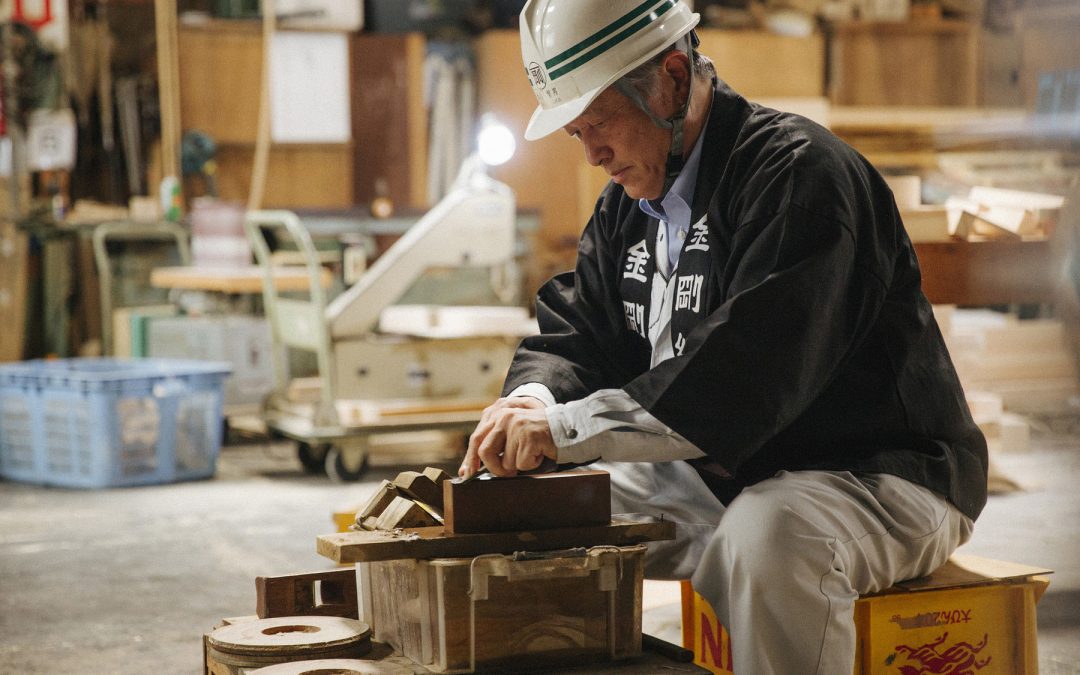
In Japan, there is a word that goes far beyond a profession: takumi. It does not refer simply to a skilled craftsperson, but to someone who has devoted decades of their life to perfecting a skill until reaching an almost invisible mastery.
The takumi does not seek recognition or speed. They seek to do things well. Always. Even when no one is watching.
This concept is deeply uncomfortable for today’s business world, obsessed with accelerated growth, quarterly results and limitless scalability. And that is precisely why it is more relevant than ever.
The craft before the result
For a takumi, value does not lie solely in the final product, but in the process itself. Every gesture matters. Every detail counts. There are no shortcuts, because shortcuts impoverish the result and degrade the craft.
In a company with soul, something very similar happens. Excellence is not born from a brilliant strategy on a slide deck, but from daily coherence between what is said and what is done:
how decisions are made, how people are treated, how one acts under pressure or uncertainty.
A company can grow without a soul.
But it cannot endure without one.
People are not resources, they are the core
The takumi understands that hands are as important as the mind. Time, repetition, slow learning and respect between master and apprentice are all part of the path. There is humility, and there is a deep commitment to shared knowledge.
Translated into the business context, the message is clear: people are not human resources; they are carriers of knowledge, dignity and purpose.
Without trust, without genuine care, without spaces to learn and to make mistakes, excellence is not possible. Only short-term performance. And that model always comes at a cost.
The customer is not a target, but a relationship
The craftsperson does not produce to gain market share. They produce to serve someone specific well. Every piece carries an implicit moral responsibility towards the person who will use it.
In companies with soul, the customer stops being a KPI and becomes a relationship built on respect, listening and quality sustained over time.
It is not about selling more, but about doing it better.
And that requires sensitivity, patience and coherence.
Sensitivity to the social and environmental context
The takumi works in dialogue with their environment. They know the materials, respect them and do not force them. There is a clear awareness of limits and of the impact of every action.
Today, an excellent company cannot be indifferent to its social and environmental impact. Not as a marketing strategy, but as a natural expression of how it does things.
Sustainability is not an add-on.
It is part of the craft.
Leading like a craftsperson
Leading a company with soul is, at its core, an artisanal act. It requires attention to detail, respect for people, a strong sense of responsibility and a long-term perspective.
It is not the fastest way.
It is not always the easiest.
But it is the only way that creates real and lasting value.
Perhaps the great challenge of contemporary leadership is not to innovate more, but to recover the spirit of the takumi:
less noise, more craft.
less haste, more meaning.