
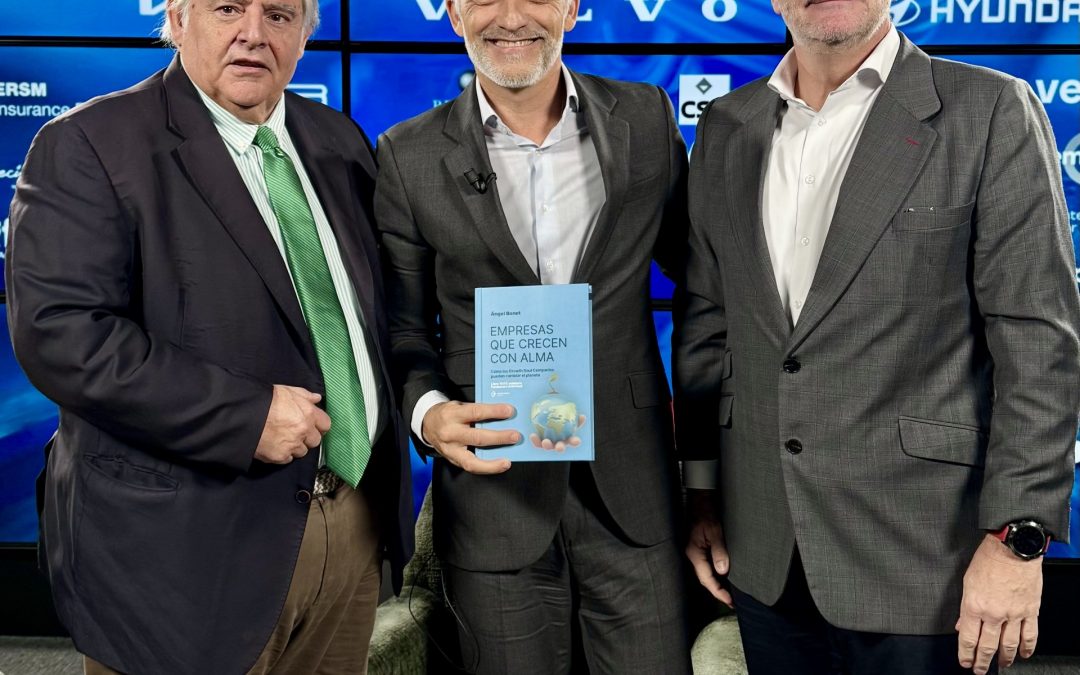
This week at Impactco, we want to share the profound reflections from a recent discussion on the program Desayunos Ruta 2030 on Negocios TV. The debate centered on a concept that is part of our consultancy’s DNA: soulful companies.
The panel featured three key figures who provided complementary visions on how to transform the current economic model:
-
Host: Javier de Ulacia, who raised the real financial and competitive challenges businesses face today.
-
Ángel Bonet: President of Impactco and author of the book “Companies that Grow with Soul,” who advocated for a global systemic change.
-
Eduardo Dívar: Managing Director of Kia Iberia, who provided a practical perspective on how a leading multinational can integrate purpose into its daily strategy.
The Dilemma of “How” vs. “How Much”
During the interview, Ángel Bonet highlighted a critical flaw in the liberal system of the last 200 years: we have become obsessed with the how much (profits, growth, GDP) while completely forgetting the how. This approach has led to an evident environmental crisis and growing social inequality.
At Impactco, we believe the company of the future must be a mechanism for generating well-being. It is not about stopping profit-making—profitability is the primary engine of sustainability—but about understanding that success is not just about amassing capital; it is about transcending and giving back to society part of what has been received.
The Kia Case: Real Sustainability Beyond Marketing
Eduardo Dívar shared tangible examples of how Kia is implementing this “purpose.” Far from being a greenwashing exercise, the Korean brand is transforming its value chain:
-
Circular Economy: Collaborations with projects like The Ocean Cleanup to recover plastics and fishing nets from the ocean and transform them into materials for vehicle interiors (such as the EV9).
-
Social Initiatives: Projects like Drops for Life, which provides access to drinking water through solar-powered wells in Morocco, and collaborations with rare disease associations and dependency support foundations in Spain.
The most relevant aspect of Eduardo’s vision is that these actions do not affect the final price for the consumer, nor are they used as the central axis of product marketing. Instead, they are part of the company’s ethical conviction.
The Role of Europe and the New Consumer
The debate also addressed Europe’s loss of industrial competitiveness against less regulated markets. However, Ángel Bonet delivered an optimistic message: Europe has the opportunity to lead a new economic model based on human values.
Four key pillars will reward soulful companies in the medium term:
-
Capital Markets: Increasingly, funds are only investing in projects with a positive impact.
-
Talent Attraction: New generations refuse to work for companies that lack a clear purpose.
-
Regulation: Legal frameworks (such as B Corp certification) are pushing toward transparency and accountability.
-
Conscious Consumption: Although slow, consumers are beginning to be willing to pay slightly more for products that respect the planet and people.
Humanizing the Business
The interview concluded with a powerful idea: it is impossible to be a soulful leader if you are not a good person. Business leadership requires high social responsibility. At Impactco, we continue working to help more companies take this step—not just because it is the right thing to do, but because it is the only way to guarantee human progress over the next 100 years.