
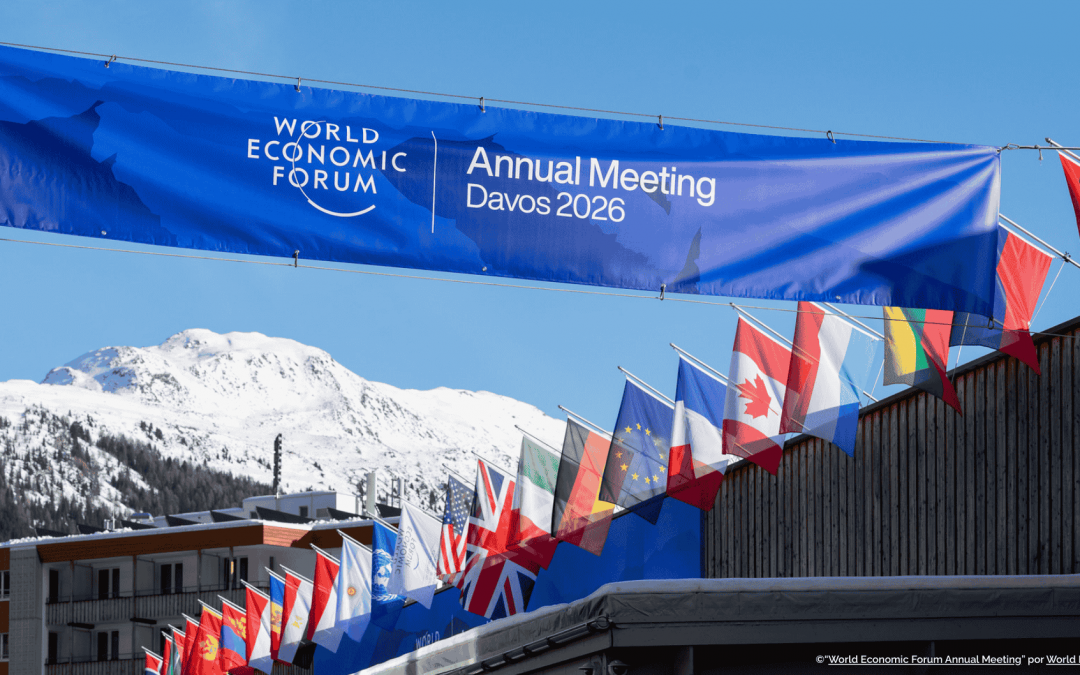
The annual World Economic Forum meeting once again brought together political leaders, CEOs and major investors in Davos, against a backdrop defined by three clear tensions: economic slowdown, an increasingly visible climate crisis, and a geopolitical disorder that is no longer temporary, but structural.
Real outcomes? The assessment is mixed. There was broad consensus on the diagnosis, but little concrete progress on binding commitments.
What became clear
The energy transition is no longer debated in terms of “if”, but in terms of speed and political cost. Even so, many governments continue to protect short-term fossil fuel interests.
Artificial intelligence and technology dominated the agenda, with a strong focus on productivity and competitiveness. Far less attention — far too little — was paid to their social and labour impacts.
The idea of a more inclusive capitalism remains present in the narrative, but still lacks shared metrics and real accountability mechanisms.
What disappoints
There was limited ambition around social justice and inequality reduction. Plenty of rhetoric, few measurable and verifiable commitments.
The Global South had little real influence in decision-making, despite being the region most affected by climate change and instability.
Many of the announced public–private partnerships lack clear timelines and defined funding, undermining their credibility.
Critical reading
Davos remains an excellent thermometer of global power, but is increasingly less of a driver of systemic change. Until it moves from storytelling to accountability — clear objectives, comparable data and consequences for non-compliance — the forum risks losing moral relevance, even if it retains influence.
Conclusion
Davos 2026 confirms that the world knows what needs to change. The problem is no longer knowledge, but courage. And for now, courage is not listed on the stock market.