
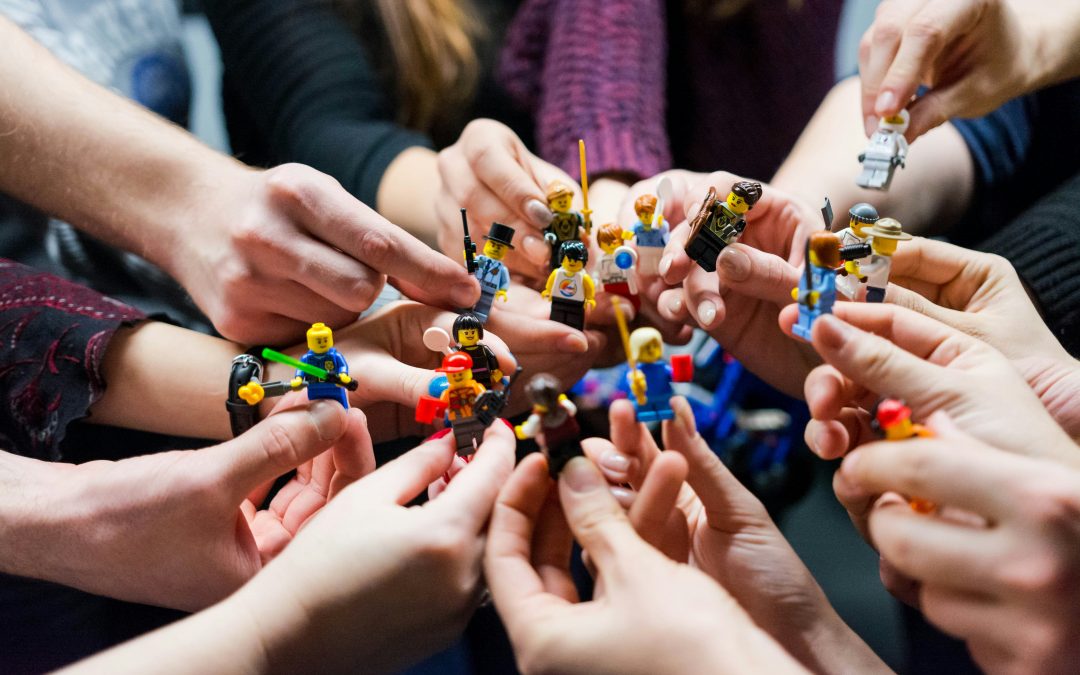
In recent years, innovation is no longer synonymous with hidden labs, isolated teams or “geniuses” working behind closed doors. Real innovation —the kind that changes systems, addresses complex social challenges and multiplies impact— happens when we open the creative process to multiple voices and actors, connecting companies, communities, institutions and diverse talent within the same ecosystem.
This approach, known as open innovation, represents a natural evolution of the purpose-driven economy: it moves from intention to distributed co-creation, where social value is generated not by protecting knowledge, but by consciously sharing it.
What do we mean by open innovation with social impact?
Open innovation is not just about “sharing ideas”. It is a organizational and cultural model that enables organizations to:
-
Incorporate solutions beyond traditional corporate boundaries.
-
Leverage collective intelligence from communities, NGOs, startups, clients and employees.
-
Transform social challenges into shared value opportunities.
Instead of operating as a black box, the innovation process becomes a relational space, capable of aligning diverse capabilities around a common purpose.
Why is this approach essential for purpose-driven organizations?
In a world where social and environmental challenges are systemic —climate change, inequality, access to essential services, social justice— solutions cannot come from a single organization alone. What is needed is:
-
Cognitive diversity: multiple ways of understanding and addressing complex problems.
-
Connection with real communities: users and affected groups as co-creators, not merely “beneficiaries”.
-
Cross-sector collaboration: companies, public institutions, the third sector and academia working together with clear, measurable goals.
This type of innovation breaks away from the logic of competing for knowledge and instead multiplies it through interconnected networks of committed actors.
Key elements of purpose-driven open innovation
For this approach to succeed, organizations must cultivate several core capabilities:
-
A culture of openness and trust. Sharing challenges, learnings and principles without fear of losing competitive advantage.
-
Relational infrastructure. Platforms, communities or physical/virtual spaces where diverse actors can contribute and co-develop solutions.
-
Shared governance models. Clear rules on decision-making and on how tangible and intangible benefits are distributed.
-
Collective impact measurement. Indicators that measure not only internal results, but also shared and community-level outcomes.
These elements not only lead to better solutions, but also strengthen legitimacy and collective ownership around a greater purpose.
A conceptual example: co-creation in urban challenges
Imagine a renewable energy company seeking to improve access to clean energy in vulnerable neighborhoods. Instead of designing a solution in isolation, it launches an open innovation process involving:
-
Local residents (to understand real needs).
-
Technology providers (to explore technical options).
-
Local NGOs (to support implementation and follow-up).
-
Public authorities (to align incentives and regulation).
-
Other companies with complementary resources (to scale solutions).
The result is not just an energy project, but a network of actors who share ownership of the challenge and work together to solve it.
From occasional collaboration to strategic collaboration
Many organizations have experimented with isolated collaborative initiatives (hackathons, temporary partnerships, sector events). But open innovation with social impact is not a one-off initiative; it is a continuous strategy that requires:
-
Integration into corporate vision and culture.
-
Formal processes connecting internal strategy with the external ecosystem.
-
Mechanisms for continuous learning and adaptation.
This approach turns the organization into a platform for transformation, where purpose is not a communication slogan, but a real anchor for alliances and shared solutions.
Conclusion: the new frontier of purpose
Open innovation does not replace internal capabilities; it amplifies them. When organizations embed systematic collaborative processes to address social and environmental challenges, they transcend their traditional role: moving from managing their own resources to becoming nodes within impact networks.
At the heart of the future purpose-driven economy lies a simple truth: complex challenges require shared solutions. Open innovation is the language, the mindset and the practice that enables this collaboration to be structured in an effective, fair and truly transformative way.