
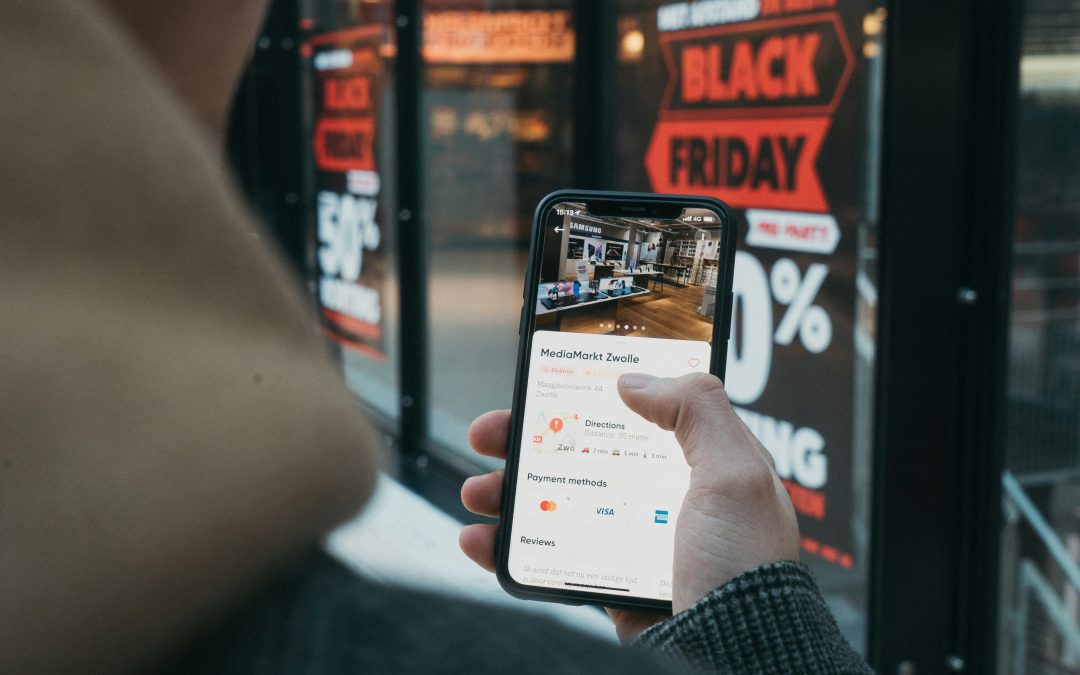
The Black Friday Frenzy: When Consumption Silences Common Sense
Every year, the same scene returns: black posters, aggressive discounts, endless lines and a frenzy seemingly designed to prevent anyone from thinking too much. Black Friday, born in the United States as a post–Thanksgiving commercial push, has become one of the clearest symbols of an economic model that drains the planet while fueling consumption that is as impulsive as it is empty.
What began as a single day of deals has turned into an entire season of compulsive buying. And hardly anyone stops to ask why we keep celebrating this ritual.
From a “Black Friday” to the Great Spectacle of Waste
The term emerged in the 1960s, when Philadelphia police used “Black Friday” to describe the chaos in the streets. Marketing took over from there, turning a problem into a supposed economic milestone: the day businesses go from red to black.
Today, in the midst of a climate emergency, this festival of excess feels almost obscene.
Every purchase leaves a mark: uncontrolled extraction of raw materials, factories powered by dirty energy, labor exploitation, oceans filled with plastic, rush shipping that spikes emissions, and returns that end up in landfills. And yet every November, we repeat the pattern.
A Global Paradox: Excess Here, Survival There
The contradiction becomes even clearer when we remember that this consumer frenzy occurs while half the planet struggles to survive. More than 700 million people live in extreme poverty. More than 2 billion lack stable access to food. Meanwhile, in the developed world, we fight over discounted TVs and unnecessary gadgets.
The recent failure of COP30—full of grand speeches but short on real commitments—only reinforces this global incoherence. The most polluting countries continue to avoid deciding, avoid transforming and avoid acting. Another summit ending in empty applause and growing exhaustion.
The gap between what we say and what we do keeps widening.
When “Purpose-Driven” Companies Also Give In
To this contradiction we can add another: many companies that proudly claim to be sustainable, purpose-driven or socially responsible dive into Black Friday without hesitation.
Green flags, ESG reports, emotional speeches… but when the moment comes to demonstrate coherence, they join the same frenzy of massive discounts and compulsive stimulation. These dates expose them for what they are: purpose from Monday to Thursday, aggressive consumption on Friday.
The Solution Isn’t to Stop Consuming — It’s to Consume Better
The answer isn’t to demonize consumption, but to rethink it. Buy less and buy better. Choose durable, traceable products made with social and environmental criteria. Support companies that integrate purpose beyond profit margins.
Turn every purchase into a conscious decision.
Perhaps Black Friday needs to evolve into a true Green Friday: a day to repair, reuse, donate and support local businesses and responsible brands. A day to show that progress isn’t measured in full bags, but in decisions that build a viable future.
The Purpose Economy Isn’t a Trend — It’s Our Only Alternative
The purpose economy is not a passing trend. It is the only realistic path forward. And it starts by questioning these campaigns, calling out the incoherence of those who preach sustainability while acting otherwise, and demanding that companies and governments abandon a model of consumption that no longer holds.
The planet doesn’t do discounts. And the time for looking away has run out.