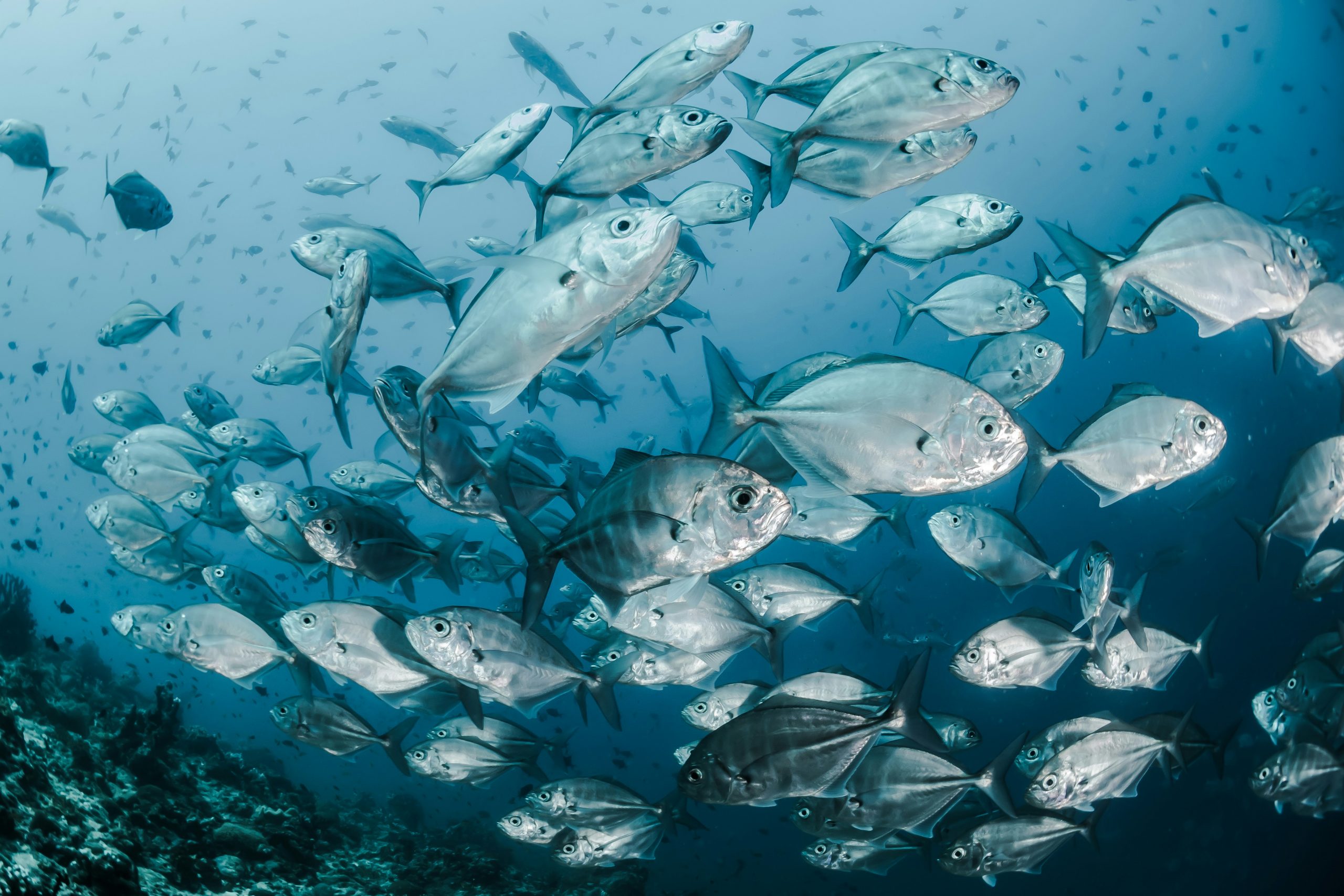
A few days ago I had a conversation I still cannot get out of my head. We were talking about the history of ideas when one image surfaced that seems to order almost everything. It comes from David Foster Wallace: two young fish are swimming along and pass an older one, who nods and says, “Morning, boys. How’s the water?” The two keep swimming until one of them looks at the other and asks, “What the hell is water?”
That is exactly our situation. We live submerged in a way of thinking that we mistake for reality, when in fact it is only the water of our own era.
Every era runs on an invisible operating system
Call it a worldview: the mental software we use to interpret what surrounds us. The hardware—our biology—has not changed in 300,000 years. The software changes with time, culture and the group we belong to. And here is the uncomfortable part: most of our ideas are not ours. They are handed to us. We breathe them in without ever seeing them.
This obsesses me because I have spent years defending a thesis that is simple to state and hard to accept: purpose is not a compliance layer, it is a management model. And you cannot grasp that thesis without first understanding the water we are breathing today.
Five operating systems in 300,000 years
Every worldview, in every era, answers three questions. One about the absolute: is there a truth that orders everything? One about the world: what is this, and how does it work? And one about the human being: who am I, what should I do, where does happiness lie? Change the answers and you change the civilisation.
The West has had, in essence, five. In the Palaeolithic, the truth was Mother Earth; the world was her sacred body; and the human being was an equal among living things. In the Ancient World, the agricultural revolution gave us surpluses and, with them, hierarchies, property and a more violent world. Greece thought; Rome executed. In the Middle Ages, a single God explained everything and the human being was the most beloved creature of creation. Three different worldviews, separated by millennia, yet sharing something that would later change everything: in all three, the absolute existed, the world was sacred, and the human being was sacred.
A note on method. The most common mistake when looking at the past is anachronism: judging it with the categories of the present. It circles overhead like a vulture. And it is precisely the mistake a company makes when it tries to govern 2026 with the operating system of 1995.
The great rupture: when the world stopped being sacred
Then came Modernity. Copernicus and Galileo removed us from the centre of the cosmos. Bacon gave us the scientific method. Descartes resolved to rebuild the entire edifice of knowledge on a single new pillar: reason. Kant summed it up in two words that still raise the hairs on my arm: sapere aude, dare to know. It was a giant leap. We won rights, science, freedom.
But the rupture carried a cost we are still paying. For the first time in history, the absolute disappeared from the centre and the world stopped being sacred. And if the world is no longer sacred, what is it? Mere matter. A resource. Something to be exploited. That sentence, apparently philosophical, is the birth certificate of the most extractive form of capitalism and of the environmental devastation now coming due. The paradox is brutal: in the name of reason and freedom we also got the Napoleonic wars, colonialism and two world wars with more than a hundred million dead.
When the world becomes pure matter, everything and everyone becomes exploitable.
The price of disorientation
Our own worldview, the last one, was born after the Second World War and says something that sounds liberating: there are no absolute truths, everyone believes what they like. It sounds good—until you live it. Because without any shared orientation, three pathologies appear that I know well from inside companies.
Relativism, the “it all depends” that turns truth into a question of consensus or of who shouts loudest. Subjectivism, building reality on a whim and demanding that everyone else accept it. And hedonism, the obsession with a pleasure that promises fulfilment and never delivers it. Chesterton saw it coming a century ago: when people stop believing in something, they end up believing in anything.
The result? You do not need to philosophise—just look at the data:
- In Spain, antidepressant consumption has grown 53.4% since 2010, rising from 64.73 to 99.27 daily doses per 1,000 inhabitants (AEMPS, 2010–2023).
- Mental disorders affected 11.08% of the population in 2013; by 2022 they reached 17.17% (Spanish Ministry of Health).
- The WHO estimates that one in four people will experience a mental disorder over their lifetime.
The West’s great silent pandemic was never a virus: it is anxiety, depression and emptiness. We have been so free that we have lost our compass.
Greece and Rome in your boardroom
Let me come down from philosophy to the income statement, which is where I live almost every day. Two lessons from this history apply directly to any company.
The first: the best leadership teams are half Greek and half Roman. You need thinkers who can see the horizon, and you need builders who can lay the aqueduct. A committee of only Greeks gets lost in brilliant presentations that lead nowhere. One of only Romans executes at full speed… in the wrong direction. Greatness lives in the tension between the two.
The second is harder. Civilisations do not fall to outside invaders. They fall when they lose their own inner energy. Rome did not collapse because of the barbarians: it imploded. And the same happens to companies. The ones that fade rarely die from a competitor; they die because they stopped having a reason for being that mobilised their people. They lose their soul before they lose market share. I wrote this in Companies that Grow with Soul, and every year that passes I see it more clearly.
The economy of purpose as the next operating system
And here is my point, the one that truly matters to me. This is not about going back. I do not want fish returning to some old water, nor old gods, nor nostalgia. It is about building the next operating system. And the economy of purpose is, quite simply, that new worldview applied to the place where much of the future is now decided: the company.
What does it consist of? In recovering an orientation without falling into any dogma. In once again treating as non-negotiable what Modernity reduced to mere matter: the dignity of people and the limits of the planet. Not out of faith, but out of intelligence. A company that understands this does not set economic value against social value: it creates both at once, because it has understood they are the same thing seen from two angles.
This is not ethics for the shop window, nor the umpteenth ESG report no one reads. It is a management model with method, cases and measurable results. It is what separates authentic purpose from purpose-washing. And it is, I truly believe, the only one of the three possible futures worth pursuing. Because there are three. Collapse, which feeds on our own self-fulfilling prophecy. The involution towards technological dystopia. And the hopeful path: recovering meaning, investing in education and acting, each of us, as a multiplier.
An echo in eternity
I will end where that conversation ended. With Marcus Aurelius: “what we do now echoes in eternity.” It sounds grandiose until you land it. The collective horizon is not built in Davos or in a board meeting. It is built in how you treat the cleaning team in your office. In whom you promote. In what you choose to measure.
Without memory we are collective amnesiacs: we understand neither the present nor where we are heading. But with memory we discover something that hands us back responsibility and, with it, real freedom. The water we will breathe tomorrow, we are choosing today. And those of us who lead companies carry a disproportionate share of that decision.
Let us not forget it.
If this analysis resonates with you, share it with someone who should read it.
Let´s talk →