Skip to content
By Ángel Bonet

A Campaign Without Direction: What Spain’s Election Is Missing

General Lifestyle
Spain votes on 29 November. After two weeks of pre-campaign and the official start of campaigning, the whole political offer leaves me with the same impression, whichever side it comes from. There are plenty of promises. What there isn't is direction, and the missing ingredient is purpose in politics. By Ángel Bonet, founder and president of ImpactCo Spain is growing. BBVA Research forecasts 2.6% this year, against 0.9% for the eurozone. Yet productivity per worker has been flat for years, public debt exceeds 101% of GDP, roughly €35,400 per inhabitant, and almost one in four young people who want to work can't find a job. We grow, but we don't advance. I'm not writing this from any trench. I have no interest in pointing at one party rather than another, because the problem I see cuts across all of them. I write as someone who has spent twenty-five years advising companies on strategic decisions. If any of the plans now being presented to voters reached the board of a large company, it wouldn't be approved. Not because of its ideology. Because of its lack of method. 1. No vision: purpose in politics starts with a destination A strategic plan always begins with the same question: where do we want to be in ten years? That is the question nobody is answering, and it is where purpose in politics begins. The campaign has turned into a catalogue of measures. Cut this tax, raise that one, build so many homes, uprate this benefit. Some are reasonable and others aren't. Almost all share one flaw, though: they answer today's problems rather than forming pieces of a national project. Nobody is explaining what Spain they want to build by 2035, what role it should play in Europe, or what it will live on a generation from now. Without vision, and without purpose in politics, every measure gets judged by its immediate electoral return. And whatever is measured by the short term ends up sacrificing the long one. 2. No metrics: promises without a price tag Any chief executive knows that an objective without a figure isn't an objective. It's a wish. In this campaign, a good part of the commitments arrive with no costing. Nobody explains what they cost, how they finance them, or what effect they will have on the deficit and the debt. Halfway through the pre-campaign, moreover, most candidacies hadn't even published their full programme. This isn't a technicality. With debt around €1.76 trillion and new issuance now financed at around 3%, every unfunded promise is an invoice passed to people who can't vote yet. Which brings me to the third absence. 3. No measurement: nobody commits to being held to account Today we require companies to measure and report their economic, social and environmental impact. Investors ask for it, regulators ask for it, talent asks for it. Yet no candidacy proposes measuring its own policies with that same rigour. Nobody sets out which wellbeing, cohesion or sustainability indicators they will use to know whether their policies work. Nobody commits to publishing, year by year, the social return on each euro of public spending. We still measure a country's success almost exclusively by GDP, an indicator that doesn't distinguish between wealth created and wealth destroyed. I have argued this many times: we need double accounting, economic and social. If we demand it of a company, we should demand it of a government with even more reason. That is what purpose in politics would actually look like in practice. 4. No new economic model: managing the old one isn't enough The economic debate in this campaign is, at bottom, the same debate as always. More state or less state. Higher taxes or lower taxes. Tighter regulation or looser regulation. These are legitimate questions, but they are twentieth-century questions. The twenty-first-century question is different. How do we design an economy that generates economic, social and environmental value at the same time, rather than one at the expense of the others? Can we turn affordable housing, longevity, long-term care, the energy transition or youth employment into markets where private capital earns by solving problems instead of profiting from making them worse? And can we stop treating business as a taxpayer to relieve or an adversary to watch, and start treating it as what it can be: the country's main engine of social transformation? That model has a name: the purpose economy. And it is absent from the debate, which is precisely why corporate purpose has become a survival strategy while public policy looks the other way. 5. No global leadership: Spain could lead and isn't even trying This is the part that bothers me most. Spain has conditions few countries combine. Abundant, cheap renewable energy. Talent. A society cohesive in the essentials. A fabric of large companies present all over the world, a privileged relationship with Latin America, and one of the highest life expectancies on the planet. With those cards, Spain could aspire to become the world's reference country in the purpose economy. It would be the place that proves you can grow, care for people and regenerate the planet at once. A laboratory exporting models, companies and impact capital. In the world that is coming, influence won't be measured only by the size of an economy, but by the capacity to offer solutions. No candidacy is putting forward that ambition. We settle for managing the situation when we could be leading the conversation. 6. No purpose in politics: the underlying problem All the previous absences share one root, and purpose in politics is the name of what is missing. Spanish politics lacks purpose: a reason for being that goes beyond winning the next election or stopping the opponent from winning it. We see it in companies every day. Businesses without purpose can grow for a while, but they end up losing direction, talent and trust. Those that have it make better decisions, because they know what they exist for and who they serve. With countries, exactly the same happens. A country, like a company, isn't lost for lack of resources. It is lost for lack of direction. What we should be demanding Whoever wins on 29 November, I believe civil society, and especially those of us who lead companies and investments, should ask the next government for four very concrete things. A vision for the country to 2035, with clear objectives, shared beyond one parliamentary term and built with the widest possible consensus. Public metrics for every major commitment, with cost, financing and timetable. A wellbeing dashboard that complements GDP and measures the social and environmental impact of public policy, independently audited. A framework that turns business into an ally for solving major social challenges, with public-private collaboration instruments and impact financing at scale. This isn't a question of left or right. It is a question of direction, and of purpose in politics. Meanwhile, companies shouldn't wait for politics to find it. Those that will lead the next decade already measure their impact, even though nobody requires it. They are already investing in solving social problems because that is where growth is. And they already know their purpose can't depend on the electoral cycle. Does your company have a direction that doesn't depend on the electoral cycle? At ImpactCo we work with chairs, CEOs and investors to turn purpose into strategy, financing and measurable growth. Write to us at tribu@impactco.es. Sources: BBVA Research; AIReF, Debt Observatory; Eurostat and Banco de España (public debt, Q2 2026); INE (youth unemployment, Q3 2026); analysis of the 29N electoral programmes published by Demócrata and Doble Lectura (November 2026). More analysis in our Insights section.

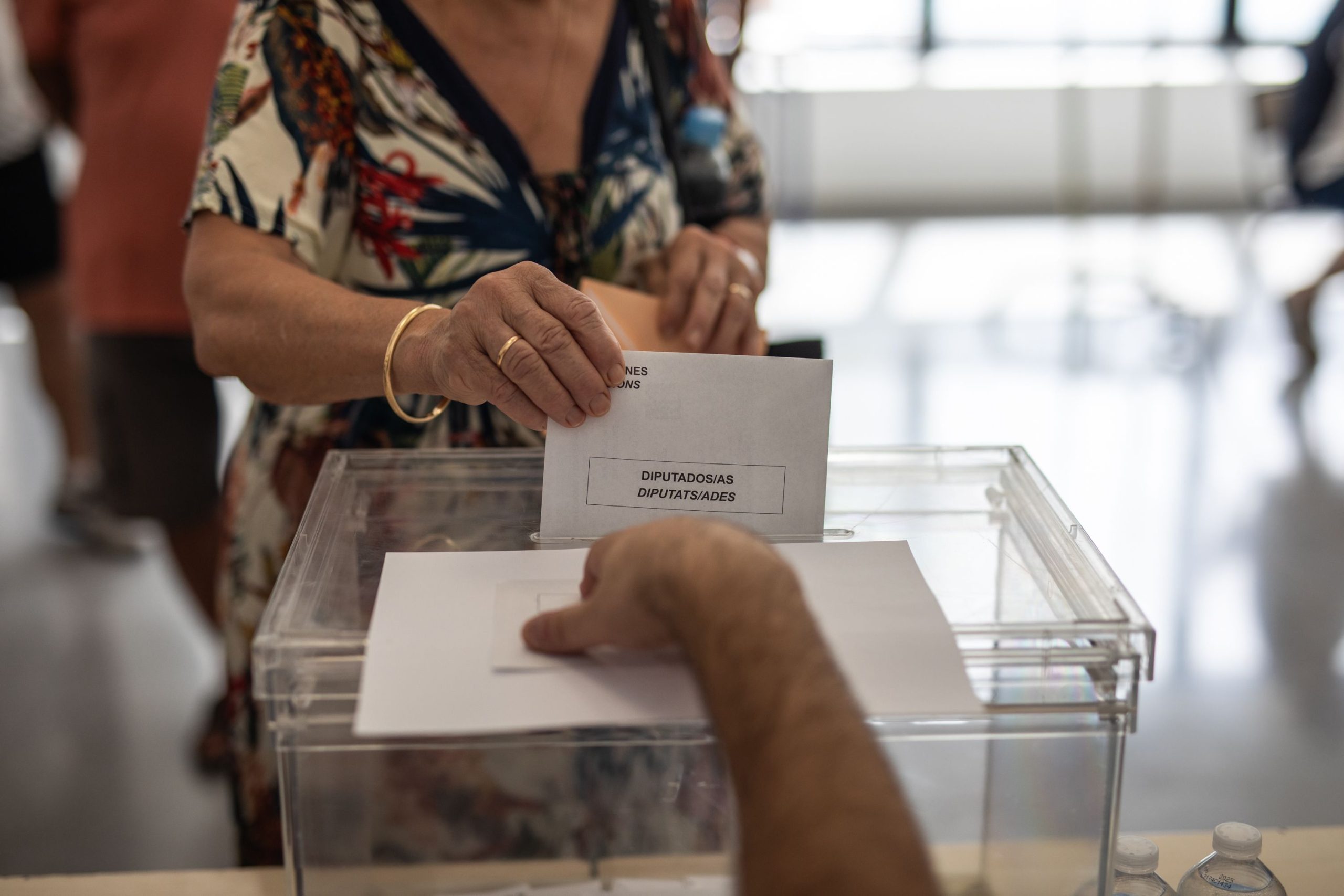
Spain votes on 29 November. After two weeks of pre-campaign and the official start of campaigning, the whole political offer leaves me with the same impression, whichever side it comes from. There are plenty of promises. What there isn’t is direction, and the missing ingredient is purpose in politics.

By Ángel Bonet, founder and president of ImpactCo

Spain is growing. BBVA Research forecasts 2.6% this year, against 0.9% for the eurozone. Yet productivity per worker has been flat for years, public debt exceeds 101% of GDP, roughly €35,400 per inhabitant, and almost one in four young people who want to work can’t find a job. We grow, but we don’t advance.

I’m not writing this from any trench. I have no interest in pointing at one party rather than another, because the problem I see cuts across all of them. I write as someone who has spent twenty-five years advising companies on strategic decisions. If any of the plans now being presented to voters reached the board of a large company, it wouldn’t be approved. Not because of its ideology. Because of its lack of method.

1. No vision: purpose in politics starts with a destination

A strategic plan always begins with the same question: where do we want to be in ten years? That is the question nobody is answering, and it is where purpose in politics begins.

The campaign has turned into a catalogue of measures. Cut this tax, raise that one, build so many homes, uprate this benefit. Some are reasonable and others aren’t. Almost all share one flaw, though: they answer today’s problems rather than forming pieces of a national project. Nobody is explaining what Spain they want to build by 2035, what role it should play in Europe, or what it will live on a generation from now.

Without vision, and without purpose in politics, every measure gets judged by its immediate electoral return. And whatever is measured by the short term ends up sacrificing the long one.

2. No metrics: promises without a price tag

Any chief executive knows that an objective without a figure isn’t an objective. It’s a wish. In this campaign, a good part of the commitments arrive with no costing. Nobody explains what they cost, how they finance them, or what effect they will have on the deficit and the debt. Halfway through the pre-campaign, moreover, most candidacies hadn’t even published their full programme.

This isn’t a technicality. With debt around €1.76 trillion and new issuance now financed at around 3%, every unfunded promise is an invoice passed to people who can’t vote yet. Which brings me to the third absence.

3. No measurement: nobody commits to being held to account

Today we require companies to measure and report their economic, social and environmental impact. Investors ask for it, regulators ask for it, talent asks for it. Yet no candidacy proposes measuring its own policies with that same rigour.

Nobody sets out which wellbeing, cohesion or sustainability indicators they will use to know whether their policies work. Nobody commits to publishing, year by year, the social return on each euro of public spending. We still measure a country’s success almost exclusively by GDP, an indicator that doesn’t distinguish between wealth created and wealth destroyed.

I have argued this many times: we need double accounting, economic and social. If we demand it of a company, we should demand it of a government with even more reason. That is what purpose in politics would actually look like in practice.

4. No new economic model: managing the old one isn’t enough

The economic debate in this campaign is, at bottom, the same debate as always. More state or less state. Higher taxes or lower taxes. Tighter regulation or looser regulation. These are legitimate questions, but they are twentieth-century questions.

The twenty-first-century question is different. How do we design an economy that generates economic, social and environmental value at the same time, rather than one at the expense of the others? Can we turn affordable housing, longevity, long-term care, the energy transition or youth employment into markets where private capital earns by solving problems instead of profiting from making them worse? And can we stop treating business as a taxpayer to relieve or an adversary to watch, and start treating it as what it can be: the country’s main engine of social transformation?

That model has a name: the purpose economy. And it is absent from the debate, which is precisely why corporate purpose has become a survival strategy while public policy looks the other way.

5. No global leadership: Spain could lead and isn’t even trying

This is the part that bothers me most. Spain has conditions few countries combine. Abundant, cheap renewable energy. Talent. A society cohesive in the essentials. A fabric of large companies present all over the world, a privileged relationship with Latin America, and one of the highest life expectancies on the planet.

With those cards, Spain could aspire to become the world’s reference country in the purpose economy. It would be the place that proves you can grow, care for people and regenerate the planet at once. A laboratory exporting models, companies and impact capital. In the world that is coming, influence won’t be measured only by the size of an economy, but by the capacity to offer solutions.

No candidacy is putting forward that ambition. We settle for managing the situation when we could be leading the conversation.

6. No purpose in politics: the underlying problem

All the previous absences share one root, and purpose in politics is the name of what is missing. Spanish politics lacks purpose: a reason for being that goes beyond winning the next election or stopping the opponent from winning it.

We see it in companies every day. Businesses without purpose can grow for a while, but they end up losing direction, talent and trust. Those that have it make better decisions, because they know what they exist for and who they serve. With countries, exactly the same happens.

A country, like a company, isn’t lost for lack of resources. It is lost for lack of direction.

What we should be demanding

Whoever wins on 29 November, I believe civil society, and especially those of us who lead companies and investments, should ask the next government for four very concrete things.

  • A vision for the country to 2035, with clear objectives, shared beyond one parliamentary term and built with the widest possible consensus.
  • Public metrics for every major commitment, with cost, financing and timetable.
  • A wellbeing dashboard that complements GDP and measures the social and environmental impact of public policy, independently audited.
  • A framework that turns business into an ally for solving major social challenges, with public-private collaboration instruments and impact financing at scale.

This isn’t a question of left or right. It is a question of direction, and of purpose in politics.

Meanwhile, companies shouldn’t wait for politics to find it. Those that will lead the next decade already measure their impact, even though nobody requires it. They are already investing in solving social problems because that is where growth is. And they already know their purpose can’t depend on the electoral cycle.

Does your company have a direction that doesn’t depend on the electoral cycle? At ImpactCo we work with chairs, CEOs and investors to turn purpose into strategy, financing and measurable growth. Write to us at tribu@impactco.es.

Sources: BBVA Research; AIReF, Debt Observatory; Eurostat and Banco de España (public debt, Q2 2026); INE (youth unemployment, Q3 2026); analysis of the 29N electoral programmes published by Demócrata and Doble Lectura (November 2026). More analysis in our Insights section.